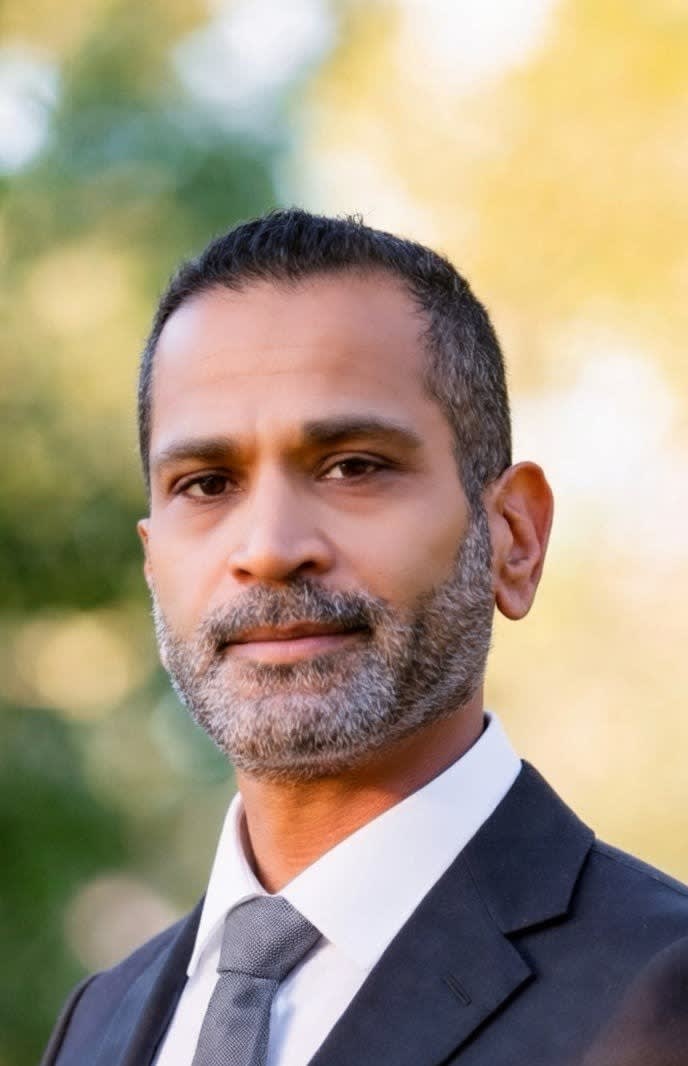
About the author →
Palm Desert reads differently from the farming and festival cities elsewhere in the Coachella Valley — its economy runs on golf, resort living, and high-end retail, and its street grid reflects that: private community roads feeding public ones, and a walkable luxury shopping district that behaves more like a downtown than a desert suburb. A Palm Desert injury case tends to turn on those particulars. Here's what's local, and how Ron Chini can help.
Palm Desert — courthouse, hospital & distance details
What makes a Palm Desert case different
A large share of Palm Desert's street network sits behind private gates — golf-course communities with their own internal roads that meet public streets at a limited number of entry points, which can raise real questions when a crash happens right at that boundary: whose insurance applies, who maintains the pavement, whose signage governed the intersection. Layer on a strong seasonal swing — Palm Desert's population climbs well above its off-season baseline as snowbirds return each fall and winter — and both traffic volume and driver familiarity with local roads shift substantially depending on the time of year. The El Paseo shopping corridor adds a third, very different environment: a walkable retail strip with valet zones, back-in parking, and pedestrian crossings that produce a different collision pattern than the fast-moving SR-111 corridor a few blocks away.
Who Responds When a Crash Happens in Palm Desert
Palm Desert contracts with the Riverside County Sheriff's Department for its police services, so a crash inside city limits is usually handled by deputies working out of the Palm Desert Station at 73705 Gerald Ford Drive. That same station also covers the neighboring contract cities of Indian Wells and Rancho Mirage, so its deputies regularly work the Highway 111 corridor and the streets around El Paseo. A crash that happens on Interstate 10, or on an unincorporated county road just outside city limits, instead falls to the California Highway Patrol's Indio Area office, which patrols I-10 and State Routes 62, 86, and 177 across the Coachella Valley.
To get a copy of the report, start with whichever agency responded to the scene. The sheriff's department and the CHP each keep their own records and handle requests separately, so knowing which agency showed up, and asking for the report number before you leave if you can, will save you a phone call later.
When a Public Agency Could Share the Blame
Not every Palm Desert crash is a simple matter between two drivers. If a broken traffic signal, a missing sign, a pothole, or a public bus played a part, a government body can end up as a defendant alongside any other driver involved. Depending on where the crash happened, that might mean the City of Palm Desert, Riverside County on a county-maintained road, Caltrans on Interstate 10, or SunLine Transit Agency, the public bus system that serves Palm Desert and the rest of the Coachella Valley.
Claims against a government agency do not run on the same clock as a claim against a private driver. California Government Code section 911.2 generally requires a written claim to the public entity within six months of the incident, far shorter than the two years generally allowed for an ordinary injury claim under Code of Civil Procedure section 335.1. Missing that six month window can shut the door on a claim before it has really opened.
How Palm Desert Compares on Statewide Crash Data
Each year the California Office of Traffic Safety ranks cities against others of similar population on a composite score built from categories like fatal and injury crashes, pedestrian and bicycle collisions, and DUI arrests. In the 2023 rankings, the most recent published at this writing, Palm Desert was grouped with California cities of roughly fifty to one hundred thousand residents and placed fifteenth out of 103 cities in that group on the composite measure.
A ranking like that will not win or lose a case on its own, but it is useful context. It tells an adjuster, and eventually a judge, that a crash like yours is not some freak occurrence in Palm Desert, and it can support questions about what the city and county have done, or not done, to address conditions on local streets.
Golf Carts Sharing Palm Desert's Streets
Palm Desert is one of the few California cities where golf carts travel the same roads as cars and delivery trucks every day. The city's municipal code lets a resident register a cart for a permit fee of ten dollars covering a two year period, after a code compliance safety inspection, then operate it on streets posted for twenty five miles per hour or less, or on the marked Class I, Class II, and Class III golf cart lanes connecting neighborhoods to the El Paseo shopping district and nearby golf courses. A permitted cart generally may not cross a state highway except at a signaled intersection.
Mixing slow, low profile carts with ordinary traffic on the same pavement creates its own crash pattern, especially where a cart lane crosses a driveway or feeds into a busier street. If a Palm Desert crash involved a golf cart, driving it, riding in it, or being struck by one while in a regular vehicle, the city's permit and lane rules can end up mattering to how fault gets sorted out.
Why work with Ron Chini in Palm Desert
Palm Desert cases travel about 98 miles from Ron's Irvine office and roughly 75 miles to the Riverside Historic Courthouse, where most Riverside County injury lawsuits are filed. Ron makes both drives himself rather than handing the file to someone he has never met. You work with him directly from the first call through any hearing, and his fee only comes out of a recovery, so there is nothing to pay up front and nothing owed if the case does not succeed.
Palm Desert personal injury FAQ
Who do I call for a collision report in Palm Desert?
What if a SunLine bus was involved in my crash?
Does Palm Desert's traffic safety ranking matter to my case?
How much time do I have to file a Palm Desert injury claim?
← Back to Riverside County Personal Injury
Ron has practiced law from his Irvine office since 2009. You work directly with him — not a paralegal or a call center.
Learn more about Ron Chini →