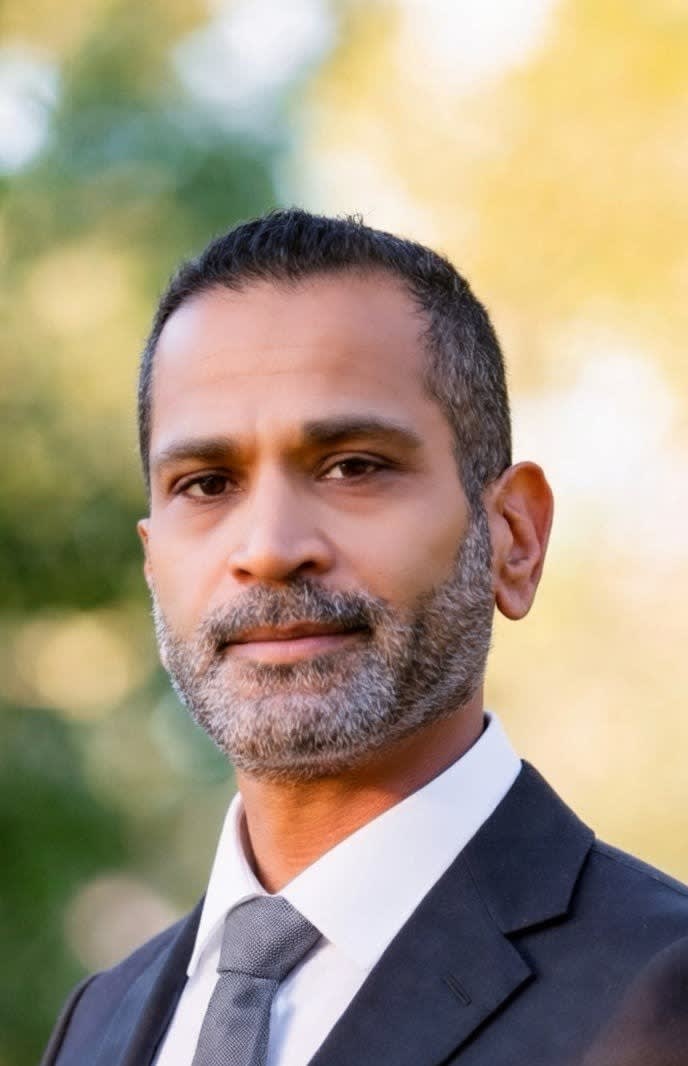
About the author →
If you were hurt because someone else was careless — a driver who ran a light, a property owner who ignored a hazard, a rideshare driver who wasn't paying attention — California law lets you seek compensation for your medical bills, lost income, and pain and suffering. But there's a deadline, the insurance company is not on your side, and how the crash happened can change everything about your claim. This page explains the law and how Ron Chini can help.
In this guide
The filing deadline — and a much shorter one
Under California Code of Civil Procedure §335.1, you generally have two years from the date of injury to file a personal injury lawsuit. Miss it, and you lose the right to sue — no matter how strong your case is. But there's a trap: if your injury involved a public entity — a city bus, a county-owned vehicle, a dangerous condition on a public road or sidewalk — the deadline to file a formal government claim is only six months from the incident (Government Claims Act, Gov. Code §911.2), and you generally can't sue the public entity at all unless you filed that claim on time. This shorter deadline surprises people constantly, and it's why calling early matters even when a case feels routine.
You can still recover even if you were partly at fault
California follows pure comparative negligence, a rule the California Supreme Court adopted in Li v. Yellow Cab (1975). In practice, that means your compensation is reduced by your percentage of fault — but it is never wiped out entirely, even if you were mostly to blame. Someone found 40% at fault for a collision can still recover 60% of their damages. Insurance adjusters routinely lean on shared-fault arguments to shrink or deny a claim; understanding exactly how comparative fault gets calculated, and pushing back on an inflated fault percentage, is a big part of what a personal injury attorney does.
Why minimum insurance often isn't enough
As of January 1, 2025, California raised its minimum auto liability limits to 30/60/15 — $30,000 per person and $60,000 per accident for bodily injury, $15,000 for property damage — the first increase since 1967, when the minimum was just 15/30/5. That's real progress, but $30,000 doesn't go far after a serious injury with surgery, physical therapy, and missed work. When the at-fault driver is only minimally insured (or not insured at all), your own uninsured/underinsured motorist (UM/UIM) coverage can become the difference between a real recovery and nothing — which is why reviewing your own policy, not just the other driver's, is one of the first things worth doing after a serious crash.
When the other driver was drunk
California's Proposition 213 (1996) generally bars uninsured drivers — and drivers convicted of DUI — from recovering pain-and-suffering (non-economic) damages, even when someone else caused the crash. It's a rule that catches a lot of injured people off guard. But there's an important exception: if the at-fault driver was convicted of DUI, an injured claimant can still recover full damages, including pain and suffering, even if the claimant themselves was uninsured. Proving that the other driver was actually impaired — and that the DUI case holds up — is exactly the kind of evidence Ron has built and challenged from both sides of the courtroom since 2009. That background is a genuine advantage when the crash that hurt you involved a drunk driver.
Why work with Ron Chini
Personal injury is a new part of Ron's practice, built on 17 years as a Southern California attorney and a specific, unusual strength: he has defended DUI cases since 2009, which means he understands exactly how DUI evidence is built, tested, and proven — knowledge that directly matters when the driver who hurt you was impaired. You work directly with Ron, not a call center or a rotating cast of case managers, and you pay no fee unless we win. He represents injury victims across Southern California from his Irvine office — in Orange County, Riverside County, San Bernardino County, Los Angeles County, and San Diego County.
Ron is an experienced attorney; he does not claim to be a certified specialist, and no result is ever guaranteed. Personal injury representation is offered on a contingency-fee basis — ask about the fee percentage during your free case review.
Types of personal injury cases
Two case types have their own detailed guide today, with more on the way. Every case type below is one Ron can evaluate in a free case review:
- Pedestrian & bicycle accidents. Pedestrians and cyclists have almost no protection in a collision, and California law gives pedestrians the right of way in a marked or unmarked crosswalk — a fact drivers' insurers routinely try to minimize.
- Rideshare accidents (Uber/Lyft). These cases involve layered insurance — the driver's personal policy, and up to $1 million in coverage from the rideshare company depending on whether the app was on, a ride was accepted, or a passenger was in the car. Sorting out which policy applies is its own challenge.
- Slip & fall / premises liability. Property owners and businesses have a legal duty to keep their premises reasonably safe. A wet floor with no warning sign, broken stairs, or poor lighting in a parking lot can support a claim if the owner knew (or should have known) about the hazard.
- Dog bites. California is a strict-liability state for dog bites (Civil Code §3342) — an owner is generally responsible for a bite even if the dog never bit anyone before and the owner had no reason to think it was dangerous.
- Wrongful death. When a family loses a loved one to someone else's negligence, California law allows certain surviving family members to bring a wrongful death claim for their own losses — a different, and often more painful, kind of case that deserves a direct conversation, not a form.
Serving Southern California
Ron represents injury victims across five counties, from his Irvine office:
Orange County
Home base — cases across OC, from Irvine to Santa Ana to Huntington Beach.
Explore Orange CountyRiverside County
Inland Empire and the Coachella Valley.
Explore Riverside CountySan Bernardino County
From the valley to the High Desert.
Explore San BernardinoLos Angeles County
Cases across LA County's court districts.
Explore Los Angeles CountySan Diego County
Central San Diego to Chula Vista and beyond.
Explore San Diego CountyPersonal injury FAQ
How much does it cost to hire Ron for a personal injury case?
What if I was partly at fault for the accident?
How long do I have to file a claim?
The other driver wasn't insured — can I still recover?
Ron has practiced law from his Irvine office since 2009. You work directly with him — not a paralegal or a call center.
Learn more about Ron Chini →